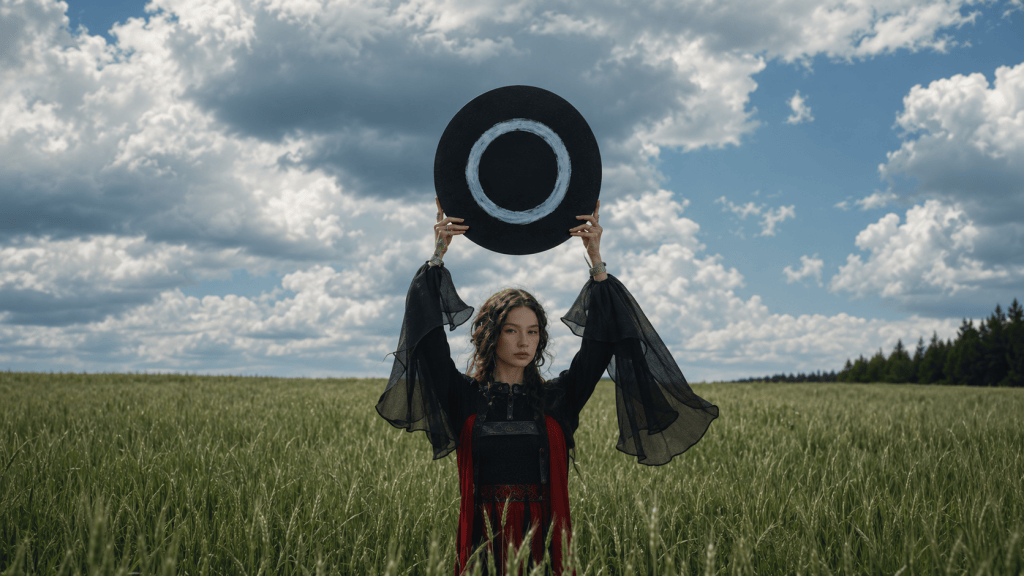
Homay, Akbuzat, and the Two Brothers
An ancient Bashkir legend tells that, in the earliest days of the world, when humanity was still surrounded by supernatural creatures and death walked among the living, two brothers were born. Their names were Ural and Shulgan.
They were the sons of Yanbirde and Yanbike, who knew the secrets of nature and lived by hunting. In those days, their parents possessed a drink prepared from animal blood, from which they drew strength and endurance. However, they forbade their sons from touching it, believing they were not yet ready to receive such power.
Ural respected the ancestral teachings, but Shulgan longed to discover the powers reserved for his elders. One day, overcome by curiosity and ambition, he disobeyed the prohibition and drank the sacred blood. Ural, however, refused to follow his example.
And so the paths of the two brothers began to separate.
When they grew older, Ural and Shulgan set out in search of the mysterious Water of Life, known as Yanshishma, a sacred spring capable of overcoming death. During their journey, they crossed unknown lands, encountered enchanted creatures, and discovered kingdoms ruled by forces that threatened human existence.
Ural became a warrior determined to protect life. Throughout his travels, he confronted cruel rulers, rescued people destined for sacrifice, and fought monstrous creatures. Shulgan, however, was gradually seduced by promises of wealth and power.
It was during these adventures that Ural encountered an extraordinary white swan. The bird, which seemed to belong to another world, was actually Homay, daughter of Samrau, the celestial ruler of birds, and the Sun itself.
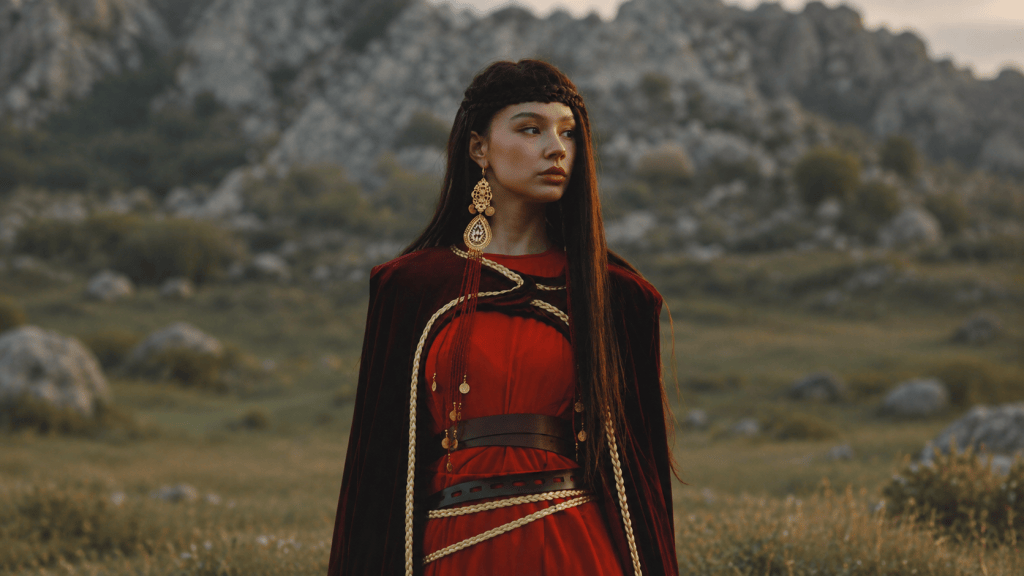
Homay was no ordinary creature. She possessed the ability to assume human form and knew the secrets of the heavenly realms. After Ural freed her, she became part of his destiny, revealing the existence of powers that could help him fulfill his mission.
Among these powers was Akbuzat, a magnificent white winged horse whose origins were connected to the heavens. His strength surpassed that of any earthly animal, and no warrior could master him without demonstrating true courage.
Homay also guarded an enchanted sword, forged with extraordinary powers, which only a worthy hero could wield.
When the time came to choose a companion, Homay announced a great trial. Whoever demonstrated his strength, earned Akbuzat’s trust, and succeeded in drawing the sword from his saddle would receive these treasures and become her husband.
Shulgan wished to win Homay and possess the celestial treasures. To him, the winged horse and the sword represented the power he had sought since childhood. Yet when he attempted the challenges, he failed to demonstrate the strength required.
Ural, on the other hand, faced the trial with courage. Before those gathered, he lifted an enormous stone that the other warriors had been unable to move and hurled it into the sky. Akbuzat recognized him as a true hero and allowed him to ride.
Thus, Ural received the winged horse and the enchanted sword, joining his destiny with Homay’s.
Mounted on Akbuzat, the warrior continued his journey against the forces of destruction. Among his greatest enemies were the azhdaha, gigantic serpents and dragons associated with fire, and the divs, supernatural beings capable of bringing suffering to humanity.
One of the most powerful was Azraka, ruler of the demons, who sought to dominate the kingdoms and possess the celestial treasures. His creatures could deceive humans, assume different appearances, and conceal their true intentions.
Shulgan, fascinated by the promises of these beings, grew increasingly close to them. The ambition that had once driven him to drink the forbidden blood now led him to betray his own brother.
While Ural fought to preserve life, Shulgan desired power for himself. The two brothers, who had once departed together in search of immortality, found themselves on opposite sides of a war between worlds.
In one of his acts of betrayal, Shulgan obtained a powerful enchanted staff and struck it against the earth, unleashing an immense flood. The waters swept across the lands, threatening humans, animals, and celestial creatures.
Homay was also affected by these forces, while Ural was forced to face new dangers to restore harmony.
With his sword and the help of Akbuzat, the warrior fought the monsters, defeated his enemies, and freed the peoples who had lived under their domination. His battle against Azraka was so tremendous that, according to tradition, the remains of the mighty demon gave rise to one of the Ural Mountains.
Shulgan, however, remained associated with the subterranean and aquatic realms. Deep beneath the earth, among caves and hidden waters, he found refuge alongside the creatures his brother had fought.
His name became associated with Shulgan-Tash Cave, also known as Kapova Cave, in the Ural Mountains. According to local traditions, this mysterious place preserves the memory of the brother who abandoned ancestral wisdom and chose the path of shadows.
But Ural’s greatest mission was still to come.
After many battles, the warrior finally reached the sacred spring of Yanshishma, where the Water of Life flowed. Its waters held the power to grant immortality, offering the hero the opportunity to escape death forever.
Yet Ural understood that eternal life should not be a privilege reserved for a single warrior.
Instead of drinking the miraculous water, he decided to offer it to nature itself. He poured it upon the earth, causing fields to bloom, vegetation to flourish again, and the force of life to spread throughout the world.
The earth received this blessing, but death did not disappear entirely from human existence.
As time passed, Ural’s sons grew and began to accompany their father’s mission. Their names were Idel, Yaik, Hakmar, and Nugush, warriors destined to continue protecting the land and its inhabitants.
However, Shulgan and his allies still remained hidden in the deep waters. The serpents and demons had taken refuge in a great lake, contaminating its waters and preventing living beings from benefiting from them.
Ural decided to confront those forces one final time.
He approached the lake and began drinking its waters, believing he could empty it and reveal the hiding place of Shulgan and his followers.
But when Shulgan realized what was happening, he ordered his creatures to enter the warrior’s body along with the water. The monsters attacked Ural from within, mortally wounding him.
The great hero, who had defeated dragons and demons, was finally overcome by the sacrifice he had made to protect life.
When his companions brought him the Water of Life once more, Ural refused the opportunity to save himself. He chose to pour the sacred liquid upon the earth so that its power would remain in plants, trees, and future generations.
Before dying, he gathered his sons and passed on his final teachings. He instructed them not to drink from the contaminated waters where their enemies had hidden, but to open new paths that would bring clean water to all living beings.
His descendants obeyed.
With the sword inherited from their father, they carved passages through mountains and rocks, giving rise to the great rivers Idel, Yaik, Hakmar, and Nugush, which would continue to nourish the earth and sustain life.
When Ural-Batyr finally died, the peoples he had protected gathered to honor him. His body was buried beneath a great mound, and the mountain formed in his memory came to bear his name.
Thus, according to legend, the Ural Mountains came into being, and the earth itself preserved the memory of the warrior. Even the treasures hidden within their depths, such as gold and precious stones, were said to be connected to the remains of the one who had devoted his existence to protecting the world.
Homay remained connected to Ural’s memory and the continuation of his lineage, while Akbuzat, the magnificent winged horse, became a symbol of courage, freedom, and the connection between earth and heaven.
Shulgan, in turn, remained associated with the mysteries of underground waters, caves, and hidden realms.
And so the two brothers, born of the same parents and raised under the same teachings, came to represent opposing destinies. Ural discovered true greatness by devoting his strength to life, while Shulgan, consumed by ambition, lost himself in the pursuit of a power he could never truly master.
From that time onward, the mountains, rivers, and caves of the Urals would preserve the memory of that ancient battle.
And among the Bashkir people, the story of Ural-Batyr would continue to be passed down through generations, reminding them that even the mightiest warrior may find eternity not in his own body, but in the life he leaves flourishing after his departure.
📜 Ural-Batyr: An Ancient Legend of the Bashkir People
The legend of Ural-Batyr is one of the most important spiritual and mythological narratives of the Bashkir people, a Turkic ethnic group native to the Southern Ural Mountains, a region between Europe and Asia, primarily located in what is now the Republic of Bashkortostan, Russia.
Passed down orally for generations by traditional storytellers known as sesens, the epic preserves ancient beliefs about the forces of nature, the struggle between life and death, the celestial realms, and humanity’s relationship with the spiritual world.
Although its precise origins remain unknown, the narrative contains elements of ancient Turkic cosmology and pre-Islamic spiritual traditions. The epic was first recorded in writing in 1910 by Bashkir folklorist Mukhametsha Burangulov, preserving a story that had circulated through oral tradition long before the twentieth century.
Through the adventures of Ural-Batyr, his brother Shulgan, the celestial maiden Homay, and the winged horse Akbuzat, the legend explores the meaning of courage, ancestral wisdom, sacrifice, and the pursuit of immortality.
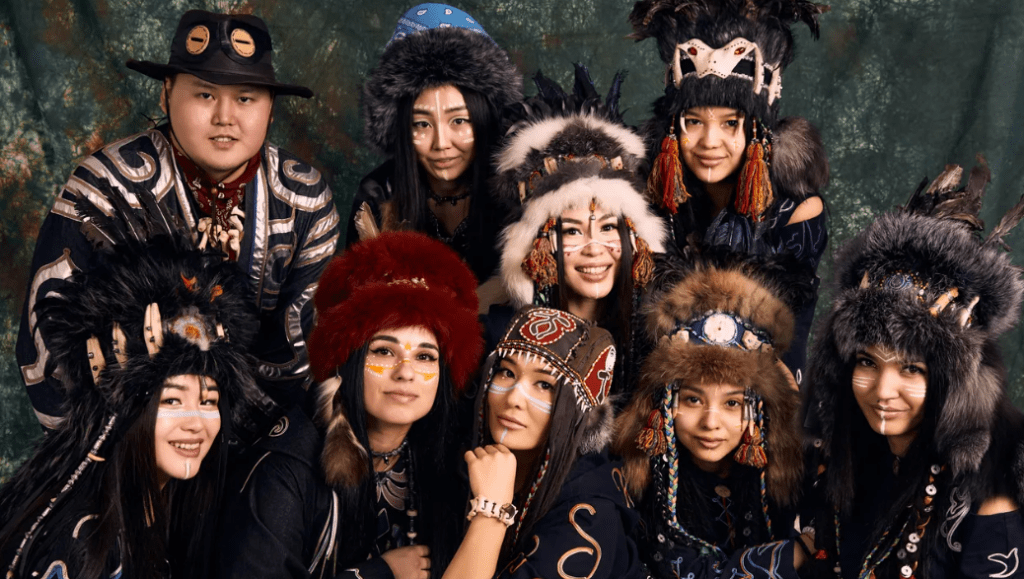
Today, these ancient traditions continue to inspire Bashkir music and cultural expression, including the work of the musical group AY YOLA.
✨ What if the Battle Between Ural and Shulgan Were Also a Battle Against One’s Own Reflection?
In a symbolic interpretation, when the adversary disappears, the warrior is left to realize that the deepest confrontation was never confined to the external world. The true trial was recognizing what needed to be overcome within himself: anger, greed, pride, and the shadows that can distance the spirit from its own essence.
In this sense, the ancient Bashkir epic has traveled through centuries as a story about choices, ancestry, and consciousness. Ural’s power does not arise from breaking a sacred teaching, but from his ability to remain faithful to life, even when facing the greatest temptations.
And in the Ural Mountains, where caves preserve the memory of ancient peoples and waters disappear into the depths of the earth, the names of Ural and Shulgan continue to remind us that not every battle is fought against a visible enemy.
📜 A lenda de Ural-Batyr
Homay, Akbuzat e os dois irmãos
Conta uma antiga lenda basquire que, nos primeiros tempos do mundo, quando a humanidade ainda vivia cercada por criaturas sobrenaturais e a morte caminhava entre os seres vivos, nasceram dois irmãos chamados Ural e Shulgan.
Eram filhos de Yanbirde e Yanbike, que conheciam os segredos da natureza e viviam da caça. Naqueles tempos, seus pais possuíam uma bebida preparada com sangue dos animais, da qual retiravam força e resistência. Entretanto, proibiam os filhos de tocá-la, pois acreditavam que ainda não estavam preparados para receber aquele poder.
Ural respeitava os ensinamentos ancestrais, mas Shulgan desejava conhecer os poderes reservados aos mais velhos. Certa vez, vencido pela curiosidade e pela ambição, desobedeceu à proibição e bebeu o sangue sagrado. Ural, por sua vez, recusou-se a acompanhá-lo.
Foi assim que os caminhos dos dois irmãos começaram a se separar.
Quando cresceram, Ural e Shulgan partiram em busca da misteriosa Água da Vida, conhecida como Yanshishma, uma fonte capaz de vencer a morte. Durante a jornada, atravessaram territórios desconhecidos, encontraram criaturas encantadas e descobriram reinos governados por forças que ameaçavam a existência dos homens.
Ural tornou-se um guerreiro determinado a proteger a vida. Em suas viagens, enfrentou governantes cruéis, salvou pessoas destinadas ao sacrifício e combateu criaturas monstruosas. Shulgan, entretanto, foi gradualmente seduzido pelas promessas de riqueza e poder.
Foi durante essas aventuras que Ural encontrou um extraordinário cisne branco. A ave, que parecia pertencer a outro mundo, era na verdade Homay, filha de Samrau, o soberano celestial das aves, e da própria divindade solar.
Homay não era uma criatura comum. Possuía a capacidade de assumir a forma humana e conhecia os segredos dos reinos celestiais. Ao ser libertada por Ural, passou a fazer parte de seu destino, revelando ao guerreiro a existência de poderes capazes de ajudá-lo em sua missão.
Entre esses poderes estava Akbuzat, um magnífico cavalo branco e alado, cuja origem estava ligada aos céus. Sua força ultrapassava a de qualquer animal terrestre, e nenhum guerreiro poderia dominá-lo sem demonstrar verdadeira coragem.
Homay também guardava uma espada encantada, forjada com poderes extraordinários, que somente um herói digno poderia empunhar.
Quando chegou o momento de escolher um companheiro, Homay anunciou uma grande prova. Aquele que demonstrasse sua força, conquistasse a confiança de Akbuzat e fosse capaz de retirar a espada de sua sela poderia recebê-los e tornar-se seu esposo.
Shulgan desejava conquistar Homay e possuir os tesouros celestiais. Para ele, o cavalo alado e a espada representavam o poder que tanto procurava desde a infância. Entretanto, quando tentou superar os desafios, não conseguiu demonstrar a força necessária.
Ural, por sua vez, enfrentou a prova com coragem. Diante dos presentes, ergueu uma enorme pedra que os outros guerreiros não haviam conseguido mover e lançou-a aos céus. Akbuzat reconheceu nele um verdadeiro herói e permitiu que o montasse.
Assim, Ural recebeu o cavalo alado e a espada encantada, unindo seu destino ao de Homay.
Montado em Akbuzat, o guerreiro continuou sua jornada contra as forças da destruição. Entre seus maiores inimigos estavam os azhdaha, gigantescas serpentes e dragões associados ao fogo, e os divs, seres monstruosos capazes de provocar sofrimento entre os homens.
Um dos mais poderosos era Azraka, soberano dos demônios, que desejava dominar os reinos e possuir os tesouros celestiais. Suas criaturas podiam enganar os humanos, assumir diferentes aparências e esconder suas verdadeiras intenções.
Shulgan, fascinado pelas promessas desses seres, aproximou-se cada vez mais deles. A ambição que o fizera beber o sangue proibido agora o conduzia à traição de seu próprio irmão.
Enquanto Ural lutava para preservar a vida, Shulgan desejava conquistar o poder para si. Os dois irmãos, que haviam partido juntos em busca da imortalidade, acabaram em lados opostos de uma guerra entre os mundos.
Em uma de suas traições, Shulgan conseguiu obter um poderoso cajado encantado e, ao golpeá-lo contra a terra, fez surgir uma enorme inundação. As águas avançaram sobre os territórios, ameaçando homens, animais e criaturas celestiais.
Homay também foi atingida por essas forças, enquanto Ural precisou enfrentar novos perigos para restaurar a harmonia.
Com sua espada e a ajuda de Akbuzat, o guerreiro combateu os monstros, derrotou os inimigos e libertou os povos que viviam sob seu domínio. Sua luta contra Azraka foi tão grandiosa que, segundo a tradição, os restos do poderoso demônio deram origem a uma das montanhas dos Urais.
Shulgan, entretanto, continuou associado às forças subterrâneas e aquáticas. Nas profundezas da terra, entre cavernas e águas ocultas, encontrou refúgio ao lado das criaturas que seu irmão havia combatido.
Seu nome permaneceu ligado à Caverna de Shulgan-Tash, também conhecida como Caverna de Kapova, nas montanhas dos Urais. Segundo as tradições locais, aquele lugar misterioso conserva a memória do irmão que abandonou a sabedoria ancestral e escolheu o caminho das sombras.
Mas a maior missão de Ural ainda estava por se cumprir.
Depois de muitas batalhas, o guerreiro finalmente alcançou a fonte sagrada de Yanshishma, onde corria a Água da Vida. Suas águas tinham o poder de conceder a imortalidade, oferecendo ao herói a oportunidade de escapar para sempre da morte.
Entretanto, Ural compreendeu que a vida eterna não deveria ser um privilégio reservado a um único guerreiro.
Em vez de beber a água milagrosa, decidiu oferecê-la à própria natureza. Derramou-a sobre a terra, fazendo florescer os campos, renascer a vegetação e espalhar a força da vida pelo mundo.
A terra recebeu aquela bênção, mas a morte não desapareceu completamente da existência humana.
Com o passar do tempo, os filhos de Ural cresceram e passaram a acompanhar a missão do pai. Seus nomes eram Idel, Yaik, Hakmar e Nugush, guerreiros destinados a continuar a proteção da terra e de seus habitantes.
Entretanto, Shulgan e seus aliados ainda permaneciam escondidos nas águas profundas. As serpentes e os demônios haviam se refugiado em um grande lago, contaminando suas águas e impedindo que os seres vivos delas se beneficiassem.
Ural decidiu enfrentar aquelas forças uma última vez.
Aproximou-se do lago e começou a beber suas águas, acreditando que poderia esvaziá-lo e revelar o esconderijo de Shulgan e seus seguidores.
Mas, ao perceber o que acontecia, Shulgan ordenou que suas criaturas entrassem no corpo do guerreiro junto com a água. Os monstros atacaram Ural por dentro, ferindo-o mortalmente.
O grande herói, que havia derrotado dragões e demônios, foi finalmente vencido pelo sacrifício realizado para proteger a vida.
Quando seus companheiros lhe trouxeram novamente a Água da Vida, Ural recusou a oportunidade de salvar a si mesmo. Escolheu derramar o líquido sagrado sobre a terra, para que sua força permanecesse nas plantas, nas árvores e nas futuras gerações.
Antes de morrer, reuniu seus filhos e transmitiu seus últimos ensinamentos. Pediu que não bebessem as águas contaminadas onde os inimigos haviam se escondido, mas que abrissem novos caminhos para levar água limpa aos seres vivos.
Seus descendentes obedeceram.
Com a espada herdada do pai, abriram passagens entre montanhas e rochas, dando origem aos grandes rios Idel, Yaik, Hakmar e Nugush, que continuariam alimentando a terra e sustentando a vida.
Quando Ural-Batyr finalmente morreu, os povos que havia protegido reuniram-se para homenageá-lo. Seu corpo foi sepultado em uma grande elevação, e a montanha formada em sua memória passou a carregar seu nome.
Assim teriam surgido as montanhas dos Urais, onde a própria terra conservaria a lembrança do guerreiro. Segundo a lenda, até mesmo os tesouros escondidos em suas profundezas, como ouro e pedras preciosas, estariam associados aos restos daquele que havia dedicado sua existência à proteção do mundo.
Homay permaneceu ligada à memória de Ural e à continuidade de sua linhagem, enquanto Akbuzat, o magnífico cavalo alado, tornou-se símbolo de coragem, liberdade e ligação entre a terra e os céus.
Shulgan, por sua vez, continuou associado aos mistérios das águas subterrâneas, às cavernas e aos reinos ocultos.
E assim, os dois irmãos, nascidos dos mesmos pais e criados sob os mesmos ensinamentos, tornaram-se representantes de destinos opostos. Ural encontrou a verdadeira grandeza ao oferecer sua força à vida, enquanto Shulgan, consumido pela ambição, perdeu-se na busca por um poder que jamais conseguiu dominar.
Desde então, as montanhas, os rios e as cavernas dos Urais conservariam a memória daquela antiga batalha.
E, entre os povos basquires, a história de Ural-Batyr continuaria sendo transmitida através das gerações, lembrando que até mesmo o mais poderoso dos guerreiros pode encontrar a eternidade não em seu próprio corpo, mas na vida que deixa florescer depois de sua partida.
📜 Ural-Batyr: uma antiga lenda do povo basquire
A lenda de Ural-Batyr é uma das narrativas espirituais e mitológicas mais importantes dos basquires, um povo de origem túrquica nativo da região sul dos Montes Urais, território situado entre a Europa e a Ásia, principalmente na atual República do Bascortostão, pertencente à Rússia.
Transmitida oralmente durante gerações por contadores de histórias tradicionais conhecidos como sesens, a epopeia preserva antigas crenças sobre as forças da natureza, o confronto entre a vida e a morte, os reinos celestiais e a relação da humanidade com o mundo espiritual.
Embora sua origem exata permaneça desconhecida, a narrativa conserva elementos da antiga cosmologia túrquica e das tradições espirituais anteriores à expansão do islamismo na região. A epopeia foi registrada por escrito pela primeira vez em 1910, pelo folclorista basquire Mukhametsha Burangulov, preservando uma história que já circulava oralmente muito antes do século XX.
Por meio das aventuras de Ural-Batyr, de seu irmão Shulgan, da figura celestial Homay e do cavalo alado Akbuzat, a lenda apresenta ensinamentos sobre coragem, sabedoria ancestral, sacrifício e a busca pela imortalidade.
Atualmente, essas antigas tradições continuam inspirando a música e as manifestações culturais basquires, incluindo o trabalho do grupo musical AY YOLA.
✨ E se a batalha entre Ural e Shulgan também fosse uma batalha diante do próprio reflexo?
Em uma interpretação simbólica, quando o adversário desaparece, resta ao guerreiro perceber que o confronto mais profundo não acontecia apenas no mundo exterior. A verdadeira prova estava em reconhecer aquilo que precisava vencer dentro de si: a raiva, a ganância, o orgulho e as sombras que podem afastar o espírito de sua própria essência.
Assim, a antiga epopeia basquire atravessa os séculos como uma história sobre escolhas, ancestralidade e consciência. O poder de Ural não nasce da transgressão de um ensinamento sagrado, mas de sua capacidade de permanecer fiel à vida, mesmo diante das maiores tentações.
E, nas montanhas dos Urais, onde as cavernas guardam a memória dos antigos e as águas desaparecem nas profundezas da terra, os nomes de Ural e Shulgan continuam lembrando que nem todas as batalhas são travadas contra inimigos visíveis.
Brunna Melo — Strategy with Soul, Words with Presence
Brunna Melo is a content strategist, editor, copywriter, and guardian of narratives that heal. She worked in public education for a decade, where she learned through experience that all communication begins with listening. Her journey unites technique and intuition, method and magic, structure and sensitivity.
She holds a degree in International Relations, as well as technical qualifications in Human Resources and Executive Secretarial Studies. Her academic background also includes postgraduate studies in Diplomacy and Public Policy, and she is currently pursuing a degree in Psychopedagogy. From the ages of sixteen to twenty-six, she worked within the public education system of Itapevi, where she developed an attentive understanding of subjectivity, inclusion, and language as an instrument of transformation. In 2019, she completed an exchange program in Montreal, Canada, where she consolidated her fluency in French, English, and Spanish, expanding her multicultural and spiritual perspective.
Today, Brunna integrates technical SEO, conscious copywriting, and symbolic communication for brands and individuals who wish to grow upon solid foundations while respecting the reader’s time and the writer’s truth. She works on national and international projects focused on strategic positioning, academic editing, content production, and the construction of organic authority through depth and coherence.
Her work, however, extends beyond technique. Brunna is a witch with an ancient soul, deeply connected with ancestry, cycles, and language as a portal. Her writing is ritualistic, her presence is intuitive, and her work begins from the principle that communication is also an act of care: it creates fields of trust, opens space for the sacred, and establishes digitally what the body often cannot name.
A mother, neurodivergent woman, educator, and artist, Brunna transforms lived experiences into material for meaningful narratives. Her texts are not merely beautiful; they are precise, respectful, and alive. She believes that authentic content should not exist only to generate engagement, but to build bridges, evoke archetypes, create genuine impact, and leave a legacy.
She currently collaborates with agencies and brands that value content with presence, strategy with soul, and communication as a field of healing. She continues to uphold one commitment: that every written word should serve something greater.

































Deixe um comentário