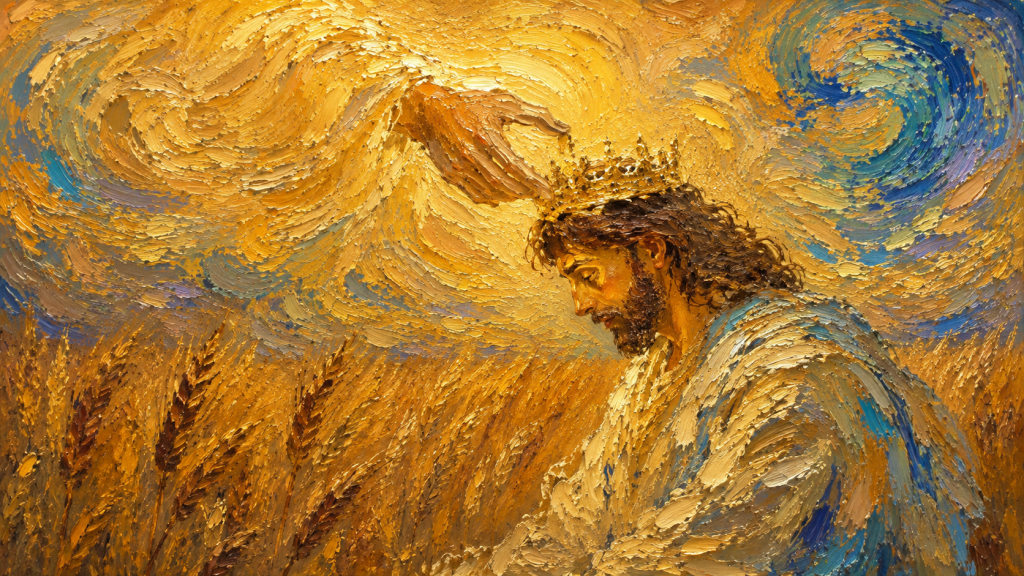
The image of Christ has never belonged to a single interpretation. Before Christianity became an institutional religion, different communities were already debating who Jesus was and what salvation meant. For some traditions, he was the Son of God sent to redeem humanity through sacrifice. For others, he was a teacher, a revealer, or the manifestation of a divine intelligence that awakened within human beings the memory of their spiritual origin.
The name Sananda belongs to a more recent layer of this history. It does not appear in ancient Gnostic texts or in the Nag Hammadi codices. Its association with Jesus became established within modern esoteric traditions connected with the Ascended Masters, the New Age movement, and forms of cosmic spirituality. Within these traditions, Sananda is presented as the spiritual name of Jesus, his higher identity, or the continuation of the teacher following his ascension. Records concerning these movements show the name being explicitly identified with Jesus Christ primarily from the twentieth century onward.
Although Sananda is not a figure from historical Gnosticism, his image resembles a Gnostic understanding of Christ: not merely the man who died, but the emissary who reminds humanity that light does not belong exclusively to temples, priests, or authorities. Gnosis is not simply religious information. It is lived knowledge and the transformation of consciousness. In Gnostic texts, liberation occurs when human beings realize that their origin is greater than the system that keeps them trapped in fear, guilt, and ignorance.
This interpretation places Christianity within a broader cultural process. Long before the formation of Judaism and Christianity, human communities were already observing solstices, equinoxes, and agricultural cycles. Newgrange, built around 3200 BCE, and Stonehenge, whose great stones were positioned around 2500 BCE, contain solar alignments related to the solstices. These monuments demonstrate that the movement of light was already organizing ceremonial spaces thousands of years before the emergence of the Abrahamic religions.
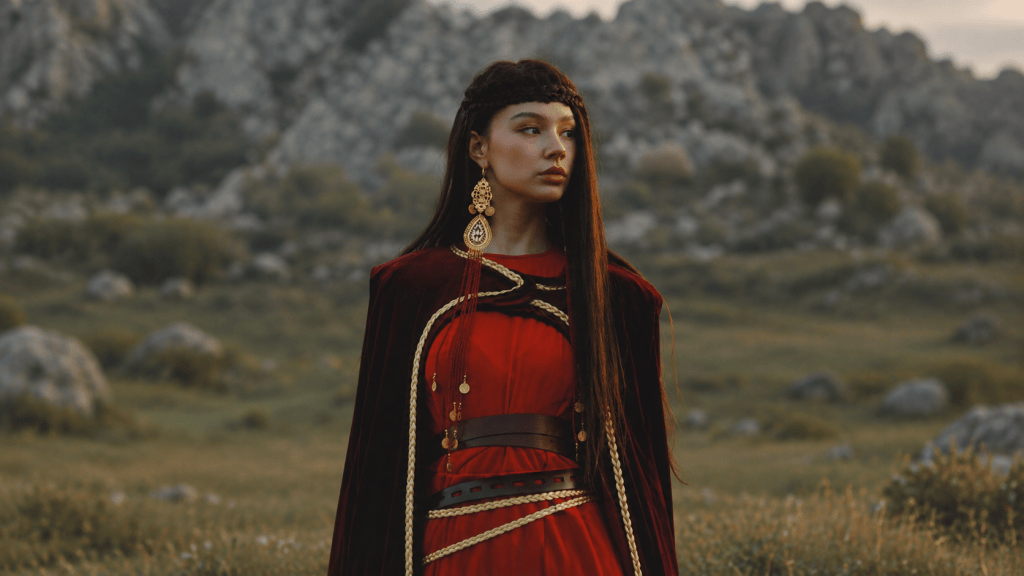
This article therefore adopts the perspective of a witch who recognizes the antiquity of the Earth’s cycles, their incorporation into the Christian calendar, and, at the same time, the contribution of Christic consciousness. Many witches orient themselves through an energy of love, awakening, autonomy, and communion with the divine. Within this interpretation, Christ does not erase the ancient mysteries; he rekindles a truth that structures of power attempted to capture.
Sophia, the Demiurge, and the Archons in Gnosticism
Gnosticism was not a single religion, but a collection of schools and systems that flourished during the first centuries of the Common Era. Among its best-known texts are the Apocryphon of John, the Hypostasis of the Archons, and the Gospel of Truth. Despite their differences, recurring themes appear: a higher divine reality, the separation of consciousness from its origin, intermediate powers, and the need to awaken through gnosis.
✨ The Pleroma, Divine Fullness
In different Gnostic systems, the Pleroma represents the fullness of divine reality. It is not described as a material place, but as a state of wholeness from which spiritual powers, often called aeons, emanate. It symbolizes existence before fragmentation, ignorance, and the experience of separation. The divine spark within human beings is understood as originating from this fullness, while awakening through gnosis allows consciousness to recognize its forgotten connection with the higher reality.
🌟 Sophia, the Wisdom that passes through the fall
Sophia means Wisdom. In several Gnostic narratives, she is a power connected with the Pleroma, the spiritual fullness. Her action generates an imbalance from which an inferior reality emerges. More than a mythological character, she symbolizes the consciousness that desires knowledge, creates, makes mistakes, descends, and participates in restoration. Sophia also offers an interpretive key that closely resembles witchcraft spirituality: knowledge is not born from blind obedience, but from experience and from the transformation of the fall into wisdom.
🜏 The Demiurge, the creator who believes himself absolute
In the Apocryphon of John, the inferior ruler is called Yaldabaoth, Saklas, and Samael. He possesses power, but remains unaware of the reality above him and therefore presents himself as the supreme authority. The Demiurge may also symbolize any system that creates a limited order and demands that it be treated as total truth.
⛓️ The Archons and the administration of imprisonment
The Archons are the powers that sustain the structure of the lower world. In the mythical interpretation, they keep the spiritual spark asleep. Within a contemporary interpretation, they symbolize mechanisms that drain autonomy: fear, guilt, submission, unquestionable authority, and the belief that access to the sacred must always depend upon intermediaries.
✨ Christ as the messenger of the higher reality
Christ does not arrive to confirm the system, but to reveal that it is not the whole of reality. His function is to remind humanity that there is a light preceding the structures that attempt to govern consciousness. Gnostic salvation does not consist only of receiving external forgiveness, but of awakening to a forgotten spiritual identity.
Christ and the Awakening Against Control
The dominant interpretation of Christianity concentrated the mission of Jesus upon his death for the sins of humanity. This narrative produced an enduring theology, but it does not exhaust the meaning of his life. Before the crucifixion, the Gospels present a man who confronts authorities, denounces religious hypocrisy, approaches those considered impure, and challenges the idea that humanity’s relationship with God should be controlled by an elite.
Historically, crucifixion was a Roman punishment involving public humiliation and repression. Research concerning Jesus connects his death with the conflict surrounding the Temple, the challenging of authorities, and the political risk created by his actions. This does not reduce his execution to a single cause, but it supports the understanding that Jesus was killed by Roman imperial power after coming into conflict with religious and political structures.
A witch’s perspective interprets this conflict as a central part of the Christic message. Christ demonstrates that light can be accessed without consciousness being drained by authorities that claim a monopoly over the sacred. He heals without requesting permission from the system, teaches outside official centers, and restores dignity to those who had been placed at society’s margins. His power did not depend upon a throne, an institution, or coercion.
His death was unable to eliminate the movement. His memory continued to grow and, centuries later, was incorporated into the same imperial world that had executed its teacher. During this process, a message of awakening could also be reorganized into a doctrine of obedience. The man who questioned authorities was used to justify new authorities. The one who pointed toward direct access to the divine came to be presented, in many contexts, as a doorway administered by institutions.
This does not invalidate Christ; it reveals the dispute surrounding his image. On one side stands the Christ used to reinforce guilt, submission, and dependence. On the other stands the Christ who awakens and reminds humanity that no institution possesses the entirety of the light. Within this second interpretation, Christ consciousness requires clarity, responsibility, compassion, and courage in the face of domination.
Christ Beyond Religious Authority
A witch’s interpretation of Christ does not need to reject Jesus in order to recognize that the Earth was already teaching its mysteries before him. Solar, lunar, and agricultural cycles prepared humanity to understand death and resurrection long before Christianity. Neolithic monuments aligned with the Sun demonstrate that light, darkness, and return had structured ceremonial spaces for thousands of years.
From this perspective, Christ does not create the truth of rebirth. He personifies it historically and spiritually. His contribution lies in returning the possibility of inner awakening, direct access to the divine, and resistance against structures that transform spirituality into control to the center of human consciousness. The narrative that he died for humanity’s sins retains devotional meaning, but it does not need to replace the interpretation that he also lived and died while confronting systems of exclusion, authority, and exploitation.
Sananda emerges as a modern interpretation of this continuity. He is not a character found within ancient Gnostic texts, but an esoteric attempt to name a Christ who transcends the institution and remains a consciousness of love, freedom, and awakening. For some traditions, he is an ascended master; symbolically, he may represent the Christic identity that was not ended upon the cross or confined within dogma.
Witchcraft recognizes that names change while cycles remain. Yule received the birth of Christ; spring received his resurrection; solar fires received saints; ancient rites were reorganized beneath new authorities. Even so, the evergreen tree remained green, the egg continued to protect life, the fire passed through the night, and the Earth continued to teach that no winter is absolute.
Christ and witchcraft may meet not through submission to the same institution, but through the recognition that light must be lived. The Gnostic Christ remembers the spark. Sophia teaches through the crossing. The Archons demonstrate how power administers fear. The Demiurge reveals the danger of a limited authority declaring itself absolute. The Wheel of the Year keeps before humanity a truth that cannot be monopolized: all existence moves, ends, is reborn, and returns.
Christ consciousness, therefore, does not belong exclusively to institutional Christianity. It may be understood as a current of clarity calling human beings away from ignorance, guilt, and dependence. Before Christ, the Earth already revealed the path. Through Christ, this path received a human voice capable of challenging control. After him, the system attempted to absorb that voice. Even so, the message survives whenever someone understands that the sacred does not need to be granted by an authority: it needs to be awakened.
Nag Hammadi, Enoch, and Texts Outside the Canon
Understanding Christ as a revealer, rather than only as a sacrifice, became more accessible following the discovery of different ancient manuscripts. These documents demonstrate that the earliest Christian and Jewish communities produced interpretations far more diverse than those preserved by dominant institutions.
The collection known as the Nag Hammadi Library was discovered in Egypt in 1945. It contained thirteen papyrus codices, more than one thousand pages, and approximately 54 distinct works. The manuscripts were written in Coptic, although many of the texts were probably originally composed in Greek between the second and third centuries. The surviving copies are generally dated to the fourth century.
Nag Hammadi is not a secret Bible, nor is it a collection created by a single group. Its codices contain texts representing different philosophical, Christian, Gnostic, and Hermetic traditions. Among the best-known works are the Gospel of Thomas, the Gospel of Philip, the Gospel of Truth, the Hypostasis of the Archons, and different versions of the Apocryphon of John.
📜 The Gospel of Thomas and the inner Kingdom
The Gospel of Thomas is a collection of teachings attributed to Jesus. Unlike the canonical Gospels, it does not present a continuous narrative concerning his birth, miracles, crucifixion, and resurrection.
Its focus lies upon the words of the teacher and the transformation of perception. The Kingdom is treated less as a future institution and more as a reality that needs to be recognized. This characteristic brings the text closer to an interpretation of Christ as someone who awakens consciousness.
🌟 The Apocryphon of John and Gnostic cosmology
The Apocryphon of John, also called the Secret Book of John or the Secret Revelation of John, is one of the principal sources for understanding Gnostic mythology. The text presents a revelation transmitted to John by the resurrected Christ.
Within it appear the higher divine reality, the Invisible Spirit, Barbelo, Sophia, the Demiurge called Yaldabaoth, and the Archons. The inferior ruler emerges from a rupture and, without recognizing the fullness that exists above him, believes himself to be the highest authority.
Humanity is formed within this system, but receives something originating from the higher reality. For this reason, the Archons attempt to keep consciousness asleep. Christ arrives as a revealer: he does not create the spark, but reminds humanity that it already exists.
The text reorganizes the Genesis narrative. The central problem is not merely human disobedience, but the ignorance produced by rulers who seek to control knowledge. Salvation occurs when consciousness understands its origin and ceases to recognize the inferior structure as an absolute authority.
⛓️ The Hypostasis of the Archons and the power that imitates
The Hypostasis of the Archons also uses elements of Genesis to discuss the origin and operation of the cosmic rulers. The Archons possess power, but not fullness. They attempt to imitate higher forms and administer a reality they do not completely understand.
Within a contemporary interpretation, this image describes systems that reproduce the appearance of the sacred in order to demand obedience. They possess temples, titles, rules, and hierarchies, but may remain separated from the direct experience of the divine.
The Gnostic narrative does not teach only that external entities control humanity. It also offers a language for recognizing psychological, political, and religious structures that survive by producing fear, guilt, and dependence.
👁️ The Book of Enoch and the Watchers
The Book of Enoch does not belong to the Nag Hammadi Library and was not originally a Christian Gnostic text. It is a Jewish apocalyptic collection composed of different sections produced during the Second Temple period.
The work expands the brief biblical passage concerning Enoch and develops narratives about the Watchers, celestial beings who descend to Earth, form relationships with human women, and transmit forbidden knowledge. From these unions come giants, commonly associated with the Nephilim. The text also presents heavenly journeys, judgments, cosmological visions, and the punishment of beings who violated the established order.
Aramaic fragments of Enoch were discovered among the Dead Sea Scrolls, demonstrating that the work circulated before Christianity. It does not belong to most current Jewish and Christian biblical canons, but it remained canonical within the Ethiopian Orthodox Church and other Ethiopian religious communities.
Enoch is important because it demonstrates that themes later associated with Christianity—including fallen angels, demons, final judgment, celestial mediators, and conflicts among spiritual powers—were already circulating within the Jewish environment preceding or surrounding the emergence of the earliest Christian communities.
📚 Other preserved codices and traditions
Not every ancient text associated with Gnosticism was discovered at Nag Hammadi. The Gospel of Mary, for example, was preserved mainly within the Berlin Codex. In this text, Mary Magdalene appears as a disciple capable of understanding teachings that the other followers cannot comprehend, while facing resistance from male authorities.
The Pistis Sophia was preserved within the Askew Codex and presents extended dialogues between the resurrected Jesus and his disciples, with particular emphasis upon Mary Magdalene. The Books of Jeu belong to the Bruce Codex. These collections demonstrate that esoteric Christian traditions continued to be copied and transmitted outside the collection that eventually became the institutional Bible.
The existence of these texts does not prove a single conspiracy responsible for concealing one perfectly organized truth. Ancient communities disagreed, competed, and defended different interpretations. The formation of biblical canons occurred over centuries and involved liturgy, episcopal authority, regional circulation, theological disputes, and institutional interests.
Even so, the result of this process was a concentration of the power to define which images of Christ could be accepted. Texts that presented Jesus as a revealer of inner knowledge, valued female figures, or questioned the creator and his rulers were classified as heretical and lost institutional space.
Nag Hammadi returned part of this plurality to the modern world. Its codices demonstrate that communities existed for which Christ did not come only to pay a spiritual debt. He came to break the state of forgetfulness.
The name Sananda does not appear within these manuscripts. Its association with Jesus belongs to esoteric movements that emerged much later. The possible connection is not documentary, but philosophical: both the modern image of Sananda and different Gnostic interpretations of Christ attempt to remove Jesus from institutional confinement and present him as a teacher of consciousness.
The value of these texts does not lie in replacing one dogma with another. It lies in demonstrating that the official narrative was never the only narrative in existence. Before institutions defined the permitted Christ, different communities had already understood him as the living Word, an inner presence, a cosmic intelligence, and a force capable of liberating consciousness from authorities that declared themselves absolute.
Pagan Festivals in the Christian Calendar
The incorporation of celebrations that preceded Christianity did not occur in a single way. In some regions, dates were repositioned; in others, deities were associated with saints, agricultural rites received biblical interpretations, and symbols connected with fertility, ancestry, or the movement of the Sun remained present beneath new narratives.
As Christianity expanded throughout Europe, it did not encounter populations without spiritual calendars. It encountered communities that already organized life around the birth of animals, planting, harvesting, seasonal changes, the duration of daylight, and the symbolic proximity of the dead. Christianization therefore had to interact with these practices, opposing some of them while absorbing others.
This continuity does not mean that every Christian holiday is an exact copy of a single pagan festival. It means that the Christian calendar was established upon a pre-existing ritual landscape, preserving elements that remained important to the populations being converted.
🕯️ Imbolc, Saint Brigid, and Candlemas
Imbolc is an ancient Gaelic celebration situated between the winter solstice and the spring equinox in the Northern Hemisphere. It was connected with the beginning of spring, the lactation of animals, purification, fire, and the goddess Brigid.
With the Christianization of Ireland, Brigid remained alive as Saint Brigid of Kildare. The saint preserved several associations attributed to the earlier divine figure, including fire, the protection of animals, healing, poetry, fertility, and sacred wells. Saint Brigid’s feast is celebrated on February 1, during the traditional period of Imbolc. Historians consider it possible that the saint and her festival represent a partial Christianization of the ancient goddess and the agricultural marker associated with her.
Candlemas occurs on the following day, a Christian festival marked by the blessing of candles and the presentation of Christ as light. The fire of Brigid and the flame announcing the return of spring were therefore reorganized around the light of Christ. The character was transformed, but the spiritual principle remained: after the dark period, a flame indicates that life is returning.
❤️ Lupercalia, Saint Valentine, and Ritualized Love
Lupercalia was celebrated in Rome during the middle of February and involved fertility, purification, sexuality, and the protection of the community. Its proximity to Saint Valentine’s Day produced the interpretation that the Christian holiday had directly replaced the ancient Roman festival.
This direct descent, however, has not been conclusively established. The romantic association of Saint Valentine developed clearly only many centuries later, particularly through the medieval literature of courtly love. Even so, the symbolic correspondence remains significant: during the same period in which ancient Romans performed fertility rites, European culture eventually began celebrating emotional bonds, courtship, and union.
Brazilian Valentine’s Day has a different history. Celebrated on June 12, it was popularized through an advertising campaign in 1949 and positioned on the day before the feast of Saint Anthony, traditionally regarded as a matchmaking saint. It does not descend directly from Lupercalia or from one of the eight Sabbats, but it preserves the same movement of concentrating desires for love, union, and marriage around a character recognized by the religious system.
🎭 Carnival, Masks, and the Inversion of Order
Carnival became established as a Christian celebration preceding Lent. It was a period during which people consumed foods and experienced pleasures that would be restricted throughout the coming season of fasting and penitence.
Its historically recognized form is primarily medieval and Christian, and it cannot be attributed entirely to a single pagan festival. However, its masks, excesses, social inversions, parades, mockery of authorities, and temporary permissions resemble patterns found within earlier celebrations, including the Roman Saturnalia and different European rites marking the transition from winter into spring.
What the Christian calendar did was place the experience of disorder within a controlled framework. It permitted a temporary period of excess before returning the population to fasting and discipline. Collective energy was not eliminated, but incorporated into the religious structure as a necessary contrast to Lent.
🥚 Easter, Ostara, and the Symbols of Spring
Christian Easter is historically connected with the Jewish Passover and with the narrative of the death and resurrection of Jesus. Its date, however, remained connected with celestial movements: it is determined according to the full Moon associated with the spring equinox in the Northern Hemisphere.
Its popular celebration incorporated symbols that do not belong to the crucifixion. Eggs, hares, flowers, nests, and bright colors speak of spring, fertility, and the return of life. The egg is not necessary for explaining the resurrection of Christ, but it is an ancestral image of life protected inside a form that appears motionless.
Ostara is the name used within contemporary witchcraft for the Sabbat of the spring equinox. Its relationship with Eostre, a Germanic divinity mentioned in medieval sources, contains historical gaps, but the presence of fertility symbols is unmistakable. By placing the resurrection of Christ at the center of this period, Christianity gave a human and religious personification to a mystery that the Earth was already presenting: that which appeared dead returns to life.
🌸 Beltane, May Festivals, and the May Queen
Beltane marked the beginning of the light season within the Gaelic calendar. Bonfires were lit to protect people and animals, while flowers, dances, encounters, and fertility symbols celebrated the vital force expanding across the Earth.
Part of this language remained within European May festivals. Decorated poles, circular dances, flower crowns, May Queens, and community celebrations continued to exist even within Christianized societies.
The month of May also became progressively dedicated to the Virgin Mary. The image of a young woman crowned with flowers and celebrated as an expression of the sacred feminine corresponded with earlier personifications of spring and fertility. This does not mean that Mary is simply a renamed pagan goddess, but that an ancient ritual structure—the feminine figure crowned at the height of flowering—survived within another religious narrative.
🔥 Litha, Saint John, and Brazil’s June Festivals
Litha is the name used within the Wheel of the Year for the summer solstice, the point at which daylight reaches its greatest duration. Ancient European celebrations of this period involved bonfires, protection, fertility, crops, water, herbs, and solar strength.
With Christianization, this period became associated with the birth of Saint John the Baptist, celebrated on June 24. The bonfires did not disappear. They received Christian explanations and were incorporated into the festivities of Saint John.
Brazil’s June Festivals preserve this European heritage while also incorporating Portuguese, Indigenous, African, rural, and regional influences. Bonfires, agricultural foods, dances, symbolic weddings, and practices of romantic divination demonstrate that the celebration remains connected with fertility, community, and cycles of production.
There is, however, an important inversion. European Saint John festivities occur near the summer solstice and correspond seasonally with Litha. In Brazil, they occur near the winter solstice, the period corresponding with Yule for traditions that adapt the Wheel of the Year to the Southern Hemisphere. The European cultural date was inherited, but not its original season.
🍞 Lughnasadh, Lammas, and the Blessing of Bread
Lughnasadh is an ancient Gaelic festival of the first harvest, celebrated between the summer solstice and the autumn equinox. It was associated with harvesting grain, fairs, games, alliances, and the recognition of the first fruits of human labor.
In Christianized England, the same period became marked by Lammas, an expression derived from “loaf mass.” Bread made from the first grain was brought to church to receive a blessing. The Christian gesture preserved the central element of the agricultural rite: harvesting, transforming the grain, offering part of the result, and expressing gratitude for the continuation of life.
The god or force of the harvest was replaced by the Christian God, but bread remained upon the altar. The ancient sacralization of food did not disappear; it came under the administration of the liturgy.
🍎 Mabon, Harvest Festivals, and Saint Michael
Mabon is the contemporary name given to the autumn equinox within the Wheel of the Year. It represents balance, the second harvest, gratitude, evaluation, and preparation for the dark season.
Within Christian Europe, harvest festivals continued to occur near this period. One of the most important was Michaelmas, the Feast of Saint Michael and All Angels, celebrated on September 29. In different regions, it marked the conclusion of contracts, payments, fairs, the reorganization of labor, and the completion of harvests.
Modern Thanksgiving celebrations also express the harvest archetype, although they possess their own national histories and do not descend directly from Mabon. The correspondence lies within the principle: gathering the community, recognizing the fruits received, and preparing for scarcity or withdrawal.
🎃 Samhain, Halloween, All Saints’ Day, and All Souls’ Day
Samhain marked the end of the harvest and the beginning of the dark half of the year among Gaelic peoples. It became associated with ancestry, spirits, bonfires, protection, and the symbolic weakening of the boundaries between the living and the dead.
With Christianization, this period came to include All Saints’ Day on November 1 and All Souls’ Day on November 2. The previous evening became All Hallows’ Eve, the expression from which the word Halloween developed.
Costumes, lanterns, offered foods, visits to the dead, and stories concerning spirits survived the transformation. The Christian institution altered the manner in which the dead were named—saints, martyrs, souls, and faithful departed—but it did not eliminate the collective need to recognize them when the natural cycle entered its dark phase.
🌲 Yule, Saturnalia, Sol Invictus, and Christmas
Yule corresponds with the winter solstice, when the longest night occurs and daylight gradually begins to return. Germanic and Nordic peoples celebrated midwinter with feasts, fire, evergreen branches, and symbols representing the continuity of life.
Within the Roman world, December also included Saturnalia, with gifts, collective meals, and temporary inversions of certain social hierarchies. The cult of Sol Invictus celebrated solar power within the same cultural environment in which the birth of Christ eventually came to be commemorated on December 25.
The modern Christmas tree has a later and specifically European history, but its symbolic language depends upon the ancient presence of evergreen plants within winter festivals. Pine trees, holly, and other plants that remained green demonstrated that life continued even when the landscape appeared dead.
Christianity concentrated these symbols within the figure of the child born as the light of the world. Solar light became Christic light; the return of the Sun became the birth of the Savior; gifts and feasts were reorganized around the Christian narrative. The ritual was not simply erased. It was personified and centralized.
These correspondences reveal a pattern. Christianity did not create the human need to celebrate love, harvest, fertility, death, birth, or the return of light. It incorporated these experiences into a system of characters, saints, biblical events, and religious authorities.
Personification strengthens spiritual concentration. It is easier to direct devotion toward a newborn child, a protective saint, a crowned virgin, or a resurrected teacher than toward an abstract cosmic process. The cycle receives a face; the face receives a story; the story gathers collective energy.
The problem begins when the new narrative claims exclusive authorship of the mystery and erases the cultures that were already celebrating it. Light returned before Christmas. Spring caused life to germinate before Easter. The dead were honored before All Souls’ Day. The harvest was blessed before the Christian blessing of bread.
The names changed, but the Earth continued to repeat the same teaching.
The Wheel of the Year and the Power of the Eight Sabbats
The Wheel of the Year, in its current structure of eight Sabbats, is a contemporary organization bringing together seasonal festivals from different European traditions. Four Sabbats correspond with the solstices and equinoxes, while the other four mark intermediate points connected with ancient Gaelic and agricultural calendars.
This does not mean that all ancient peoples celebrated the same Wheel using identical names and rituals. The modern system brought diverse traditions together in order to express a much older perception: that nature and consciousness pass through phases of birth, expansion, maturity, harvest, decline, death, and return.
In the Northern Hemisphere, Yule occurs in December and Litha in June. In the Southern Hemisphere, the seasonal organization is reversed: Yule occurs in June and Litha in December. Ostara occurs in September, Mabon in March, Beltane at the end of October, Samhain at the end of April, Lughnasadh in early February, and Imbolc in early August.
🌲 Yule: The Light Born Within Darkness
Yule marks the winter solstice. Night reaches its greatest extent and, from that point onward, the days slowly begin to grow longer.
Spiritually, Yule teaches that a beginning does not always arrive under visible conditions of abundance. Light is born while darkness still appears to dominate. It is a period of withdrawal, hope, gestation, silence, and trust in movements that cannot yet be perceived externally.
It is the Sabbat of discreet new beginnings. Before a new reality manifests, it emerges as a small flame protected within the night.
🕯️ Imbolc: Purification and the First Movement
Imbolc occurs between winter and spring. The cold season has not ended, but the first signs of transformation begin to appear.
Its power lies within preparation. The home is cleansed, tools are organized, and intention receives form. It is not yet the moment of full germination, but the time to recognize the desire that survived the winter.
Internally, Imbolc represents the creative flame, the recovery of will, and the purification of that which could prevent the next birth. It is the moment when consciousness begins to emerge from dormancy.
🥚 Ostara: Balance and Germination
Ostara corresponds with the spring equinox, when light and darkness reach an approximately equal relationship before the days become longer.
It is the Sabbat of germination, possibilities, fertility, and opening. That which was protected during Yule and prepared during Imbolc begins to break through its shell.
The egg represents this process precisely: a complete life remains hidden until it acquires sufficient strength to break through its own protection. Ostara teaches that every opening also requires the breaking of a structure that was once necessary.
🌸 Beltane: Union, Pleasure, and Vital Expansion
Beltane occurs between spring and summer. It is a festival of fire, vitality, sexuality, creativity, encounter, and fertility.
Its energy is not limited to physical reproduction. It includes everything that may be created when different forces meet: relationships, works, projects, alliances, and new forms of existence.
Beltane teaches that spirituality does not need to reject the body, desire, or pleasure. Life seeks to continue, multiply, and experience itself. Conscious union becomes an act of creation.
☀️ Litha: Power and Fullness
Litha marks the summer solstice, the period when daylight reaches its greatest duration. Solar strength reaches its peak, but from this same point onward, the days gradually begin to shorten.
This paradox contains its teaching: all fullness already carries the beginning of transformation. The height of power is not permanent, but it can be experienced with presence.
Litha represents fulfillment, courage, visibility, vitality, and recognition. It is the moment to occupy space and perceive that which has become strong. It also reminds humanity that power without consciousness may become excess or domination.
🍞 Lughnasadh or Lammas: The First Harvest
Lughnasadh marks the beginning of the harvest period. The first grains are cut, transformed, and shared.
The Sabbat teaches that every creation has a cost. The grain must be removed from the field and lose its original form in order to become bread. That which was planted becomes nourishment because it passes through cutting, grinding, fire, and change.
Internally, Lughnasadh is the moment to observe the first results of earlier decisions. It also asks what must be sacrificed so that the work may mature and nourish other people.
🍎 Mabon: Balance, Gratitude, and Evaluation
Mabon corresponds with the autumn equinox. Light and darkness return to a state of balance, but darkness is now moving toward predominance.
It is the period of the second harvest, gratitude, and evaluation. Harvesting alone is not enough; it is necessary to distinguish what should be stored, shared, consumed, or returned to the Earth.
Mabon represents maturity. It invites people to recognize their results without allowing abundance to become arrogance. It also makes it possible to acknowledge that some seeds did not germinate and that certain projects must come to an end.
🎃 Samhain: Death, Ancestry, and Closure
Samhain marks the end of the harvest and the entrance into the dark half of the cycle. It is associated with the dead, the ancestors, memory, and the dissolution of forms.
Within this perspective, death is neither punishment nor failure. It is a force of reorganization. Leaves fall, structures end, and energy returns to the unseen so that another cycle may begin.
Samhain teaches the release of identities, relationships, and projects that have reached their ending. It also reminds humanity that no one begins from nothing: every person carries the stories, inheritances, traumas, knowledge, and strengths of those who came before.
The eight Sabbats therefore form a map of inner transformation. Yule begins the light; Imbolc prepares; Ostara germinates; Beltane unites; Litha expands; Lughnasadh offers the first fruits; Mabon evaluates and gives thanks; Samhain ends and returns.
The Wheel does not promise a life without darkness. It teaches that darkness has a function. It also does not promise permanent growth. It demonstrates that harvesting, losing, resting, and symbolically dying are parts of the same sacred movement.
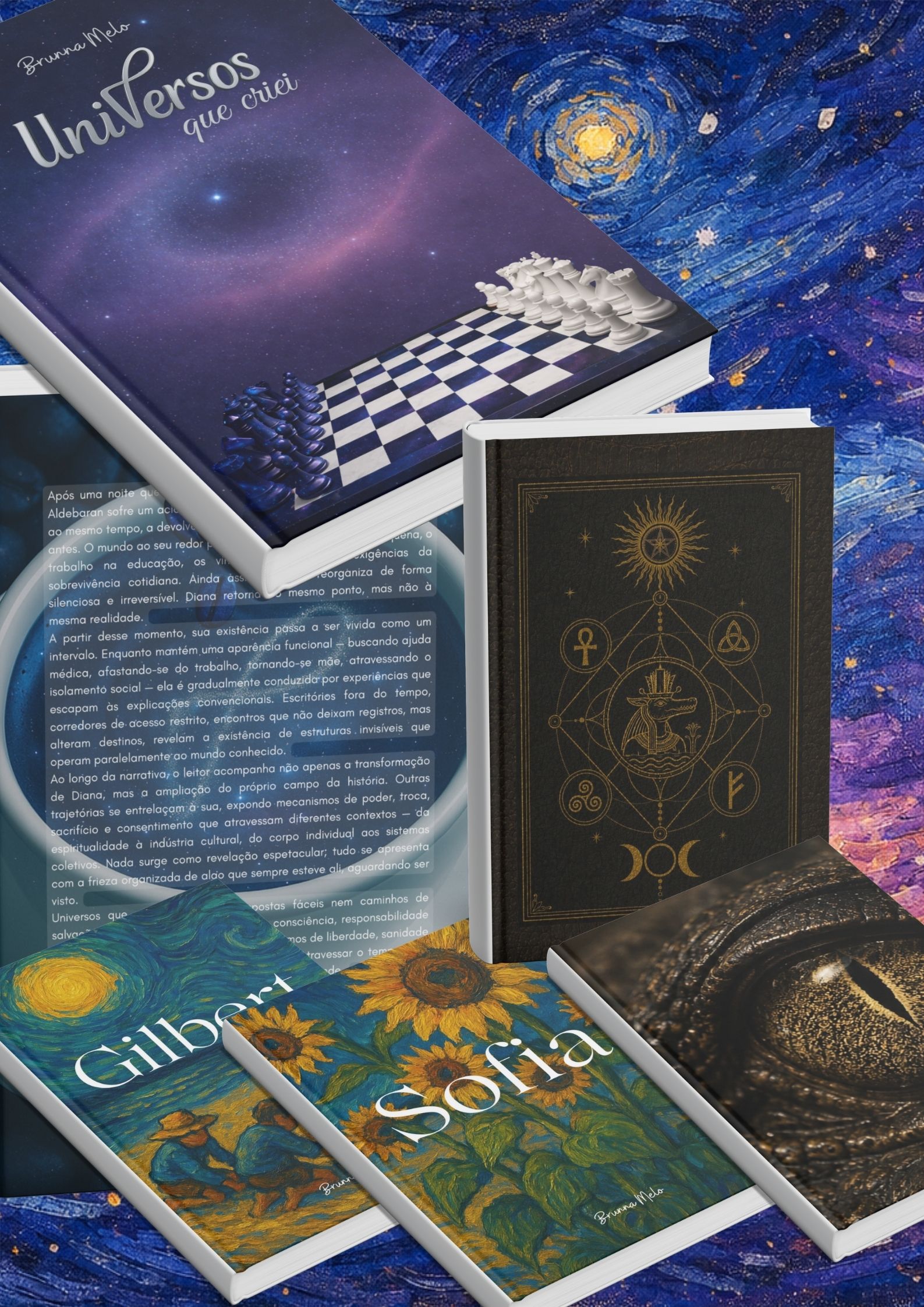
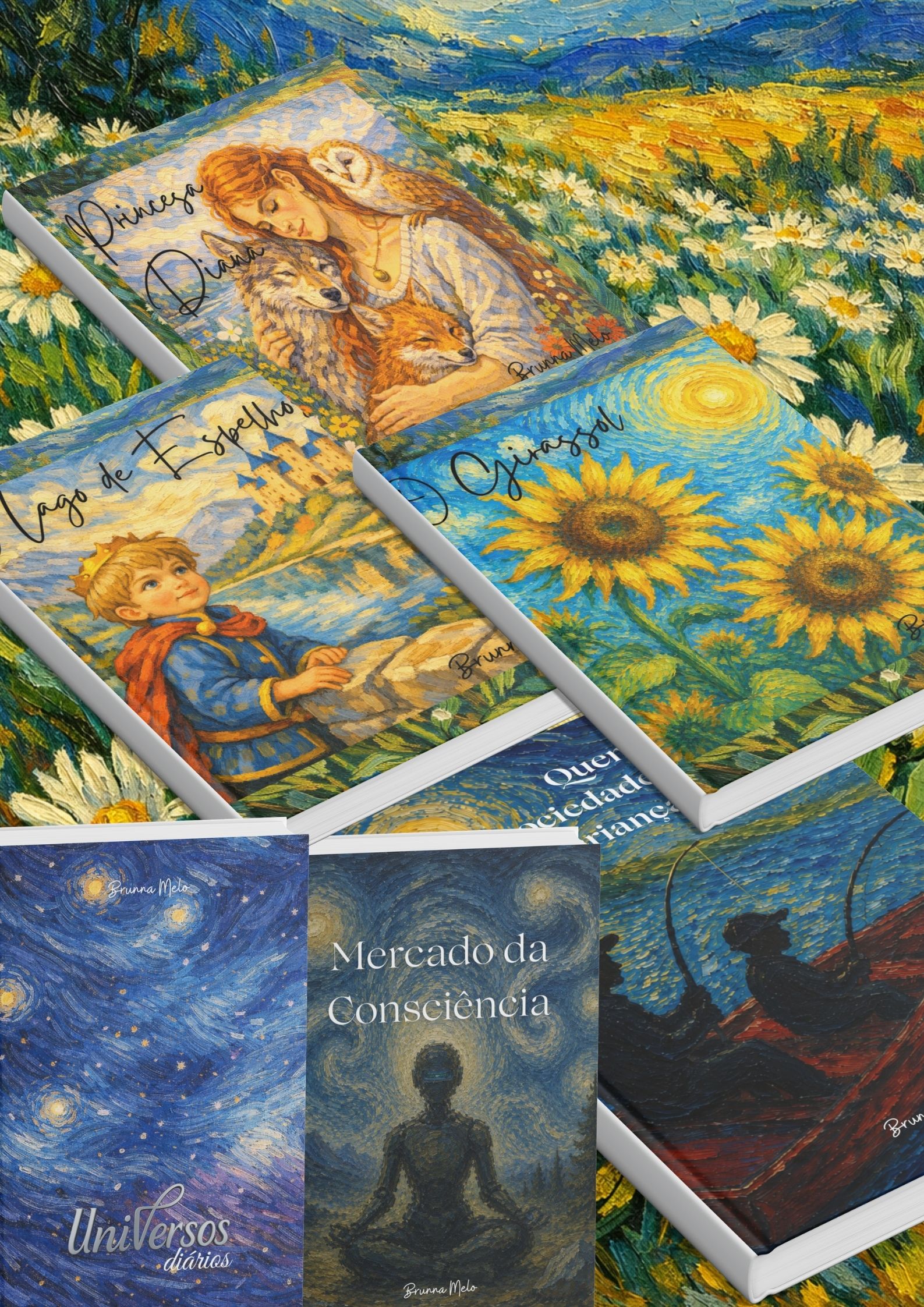
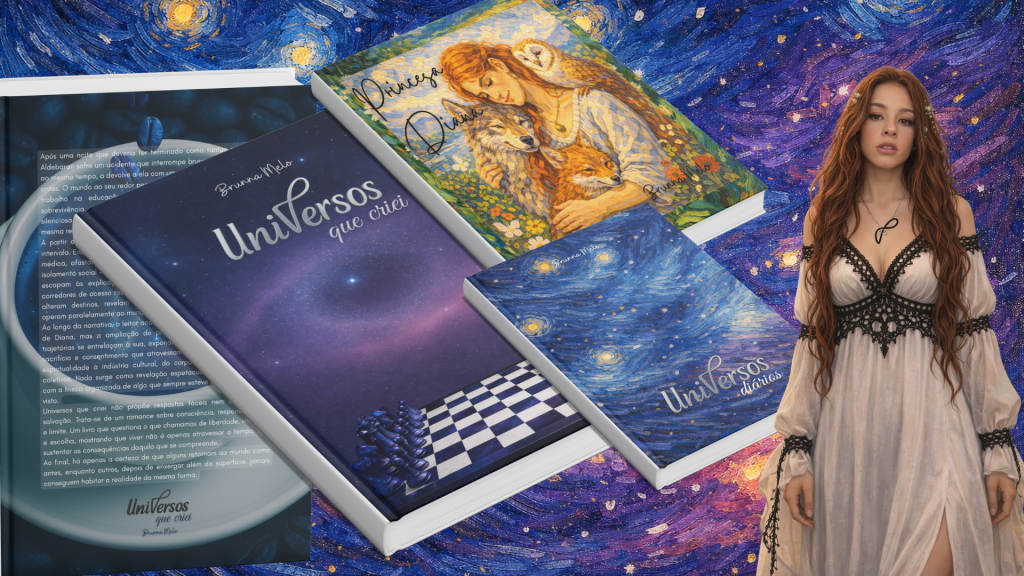
Brunna Melo — Strategy with Soul, Words with Presence
Brunna Melo is a content strategist, editor, copywriter, and guardian of narratives that heal. She worked in public education for a decade, where she learned through experience that all communication begins with listening. Her journey unites technique and intuition, method and magic, structure and sensitivity.
She holds a degree in International Relations, as well as technical qualifications in Human Resources and Executive Secretarial Studies. Her academic background also includes postgraduate studies in Diplomacy and Public Policy, and she is currently pursuing a degree in Psychopedagogy. From the ages of sixteen to twenty-six, she worked within the public education system of Itapevi, where she developed an attentive understanding of subjectivity, inclusion, and language as an instrument of transformation. In 2019, she completed an exchange program in Montreal, Canada, where she consolidated her fluency in French, English, and Spanish, expanding her multicultural and spiritual perspective.
Today, Brunna integrates technical SEO, conscious copywriting, and symbolic communication for brands and individuals who wish to grow upon solid foundations while respecting the reader’s time and the writer’s truth. She works on national and international projects focused on strategic positioning, academic editing, content production, and the construction of organic authority through depth and coherence.
Her work, however, extends beyond technique. Brunna is a witch with an ancient soul, deeply connected with ancestry, cycles, and language as a portal. Her writing is ritualistic, her presence is intuitive, and her work begins from the principle that communication is also an act of care: it creates fields of trust, opens space for the sacred, and establishes digitally what the body often cannot name.
A mother, neurodivergent woman, educator, and artist, Brunna transforms lived experiences into material for meaningful narratives. Her texts are not merely beautiful; they are precise, respectful, and alive. She believes that authentic content should not exist only to generate engagement, but to build bridges, evoke archetypes, create genuine impact, and leave a legacy.
She currently collaborates with agencies and brands that value content with presence, strategy with soul, and communication as a field of healing. She continues to uphold one commitment: that every written word should serve something greater.
F.A.Q.
1. Who is Sananda in esoteric traditions?
Sananda is presented by modern esoteric traditions as Jesus’ spiritual identity, an ascended master, or Christ consciousness, although this name does not appear in known ancient Gnostic texts available.
2. Is Sananda Jesus in Gnosticism?
Not exactly. Ancient Gnosticism does not use the name Sananda. The association emerged within modern esoteric movements, while Gnostic texts mainly present Christ as a revealer of humanity’s divine spark.
3. What is Christ consciousness?
Christ consciousness is a modern expression describing love, clarity, compassion, spiritual autonomy, and communion with the divine, inspired by Christ as a teacher who awakens inner awareness within humanity today.
4. How does Gnosticism interpret Christ?
Many Gnostic traditions understand Christ as a messenger from the higher reality, sent to awaken humanity, reveal its spiritual origin, and break the ignorance maintained by limiting powers within matter.
5. Who is Sophia in Gnosticism?
Sophia means Wisdom and represents a divine power connected to the Pleroma. Her myths explore creation, imbalance, descent, learning, and restoration, linking spiritual knowledge with transformative experience and inner awareness.
6. What is the Demiurge in Gnosticism?
The Demiurge is a lower creator who ignores the divine reality above him and considers himself absolute. Symbolically, he represents limited systems demanding obedience as though possessing unquestionable total truth.
7. Who are the Archons in Gnosticism?
The Archons are powers sustaining the lower world and keeping consciousness asleep. In modern readings, they symbolize fear, guilt, control, submission, and dependence upon external spiritual authorities claiming dominance today.
8. What is the Gnostic Pleroma?
The Pleroma is divine fullness, the higher spiritual reality from which sacred powers and intelligences emanate. In Gnostic systems, it represents the forgotten origin toward which consciousness seeks return fully.
9. What is spiritual gnosis?
Gnosis is direct, lived knowledge of the divine, not merely religious information. It transforms consciousness, breaks spiritual forgetfulness, and allows recognition of the inner spark beyond external authorities and doctrines.
10. Why was Jesus crucified?
Historically, Jesus was executed by Roman power after religious and political conflicts. His actions challenged authorities, denounced hypocrisy, and gathered followers, making his message potentially threatening to imperial order itself.
11. Did Christ die only for humanity’s sins?
Christian theology emphasizes sacrifice for humanity’s sins, but other readings highlight resistance to control, teachings about direct access to the divine, and protection of socially marginalized and excluded people communities.
12. Can Christ be understood outside Christianity?
Yes. Mystical, Gnostic, esoteric, and witchcraft traditions interpret Christ as archetype, teacher, consciousness, or awakening energy, without necessarily accepting every doctrine established by traditional Christian institutions and authorities today worldwide.
13. Can witches work with Christ consciousness?
Many witches recognize Christ consciousness through love, compassion, autonomy, truth, and inner awakening. This practice can exist without institutional submission or rejection of ancient sacred natural cycles and seasonal wisdom.
14. What was the Nag Hammadi Library?
Nag Hammadi is a collection of thirteen codices discovered in Egypt in 1945, containing Gnostic, Christian, philosophical, and Hermetic texts that reveal considerable diversity among early religious communities and teachings.
15. What does the Gospel of Thomas teach?
The Gospel of Thomas gathers sayings attributed to Jesus and emphasizes perception, self-knowledge, and the inner Kingdom. Unlike canonical Gospels, it offers no narrative of miracles, crucifixion, death, and resurrection.
16. What is the Apocryphon of John?
The Apocryphon of John is a Gnostic text presenting Sophia, Yaldabaoth, Archons, and humanity’s divine spark. In it, Christ reveals knowledge intended to free consciousness from spiritual ignorance and domination.
17. What is the Hypostasis of the Archons?
The Hypostasis of the Archons reinterprets Genesis and describes cosmic rulers imitating higher powers. It examines control, ignorance, limited creation, and humanity’s resistance through awakening and recognition of divine origin.
18. What does the Book of Enoch say?
The Book of Enoch describes Watchers who descend to Earth, transmit forbidden knowledge, and father giants. It also presents judgments, heavenly journeys, cosmological visions, and influential spiritual conflicts and traditions.
19. Is the Book of Enoch a Gnostic text?
No. The Book of Enoch is a Jewish apocalyptic work predating Christianity, although its themes involving angels, spiritual powers, and judgment deeply influenced later religious, mystical, and esoteric traditions worldwide.
20. What are apocryphal texts?
Apocryphal texts are ancient religious works excluded from particular official canons. They preserve interpretations, characters, cosmologies, and teachings rejected, forgotten, or maintained by specific historical communities outside dominant traditions today.
21. Do Christian holidays contain pagan elements?
Yes. Many Christian celebrations incorporated older dates, symbols, and customs connected with solar cycles, agriculture, fertility, harvest, ancestry, seasonal transition, and renewal, reinterpreting them through Christian narratives and teachings today.
22. What is the relationship between Christmas and Yule?
Yule celebrates the winter solstice and gradual return of light. Christmas incorporated symbols from winter festivals, including evergreen trees, fire, feasting, gifts, and the luminous image of sacred birth itself.
23. What is the relationship between Easter and Ostara?
Christian Easter celebrates resurrection, while Ostara marks the spring equinox. Eggs, hares, flowers, nests, and fertility belong to a seasonal language of renewal incorporated into popular European Easter customs celebrations.
24. What is the relationship between Halloween and Samhain?
Halloween derives from All Hallows’ Eve and preserves elements associated with Samhain, including spirits, costumes, lanterns, offerings, and thresholds. All Saints’ Day and All Souls’ Day later Christianized this period.
25. What is the relationship between June Festivals and Litha?
Saint John festivities inherited bonfires and symbols from the European summer solstice, now associated with Litha. In Brazil, however, they occur during the Southern Hemisphere’s winter, creating a seasonal inversion.
26. What is the relationship between Imbolc and Saint Brigid?
Imbolc celebrates purification, fire, and early spring. During Ireland’s Christianization, qualities associated with the goddess Brigid remained within Saint Brigid, whose feast occurs during the same seasonal period annually today.
27. What is the relationship between Beltane and May festivals?
Beltane celebrates fire, fertility, pleasure, and vital expansion. European May festivals preserved flowers, dances, poles, and queens, while Marian devotion incorporated feminine springtime images with symbolically similar associations and meanings.
28. What are the eight Sabbats of the Wheel of the Year?
The eight Sabbats are Yule, Imbolc, Ostara, Beltane, Litha, Lughnasadh, Mabon, and Samhain. They represent seasonal stages of birth, preparation, expansion, harvest, ending, death, renewal, inner transformation and growth.
29. How does the Wheel of the Year work in the Southern Hemisphere?
In the Southern Hemisphere, seasonal Sabbats are reversed from Northern dates. Yule occurs in June, Litha in December, Ostara in September, and Mabon in March, following local seasons accurately today.
30. What is the spiritual meaning of the eight Sabbats?
The eight Sabbats form a map of inner transformation. They teach gestation, purification, germination, union, power, first harvest, gratitude, symbolic death, ancestry, renewal, and the continuing return of light within.

































Deixe um comentário